Latest Posts

Overhead shot of beautiful homes in a suburban Tennessee neighborhood, showcasing lush greenery and modern architecture.

September 2026 Market Update

Understanding the real estate market The biggest news as we wrapped up September and headed into October has been mortgage interest rates. Rates have climbed

Read More »
stock, trading, monitor, business, finance, exchange, investment, market, trade, data, graph, economy, financial, currency, chart, information, technology, profit, forex, rate, foreign exchange, analysis, statistic, funds, digital, sell, earning, display, blue, accounting, index, management, black and white, monochrome, stock, stock, stock, trading, trading, trading, trading, trading, business, business, business, finance, finance, finance, finance, investment, investment, market, data, data, data, graph, economy, economy, economy, financial, technology, forex

Interest Rate Update

Where are rates today? 30-Year Fixed 15-Year Fixed 7.4% 6.71% 1 yr ago: 6.27% 1 yr ago: 5.52% 4 Things that need to happen for

Read More »
Contemporary apartment building facade with balconies in an urban setting.

Should I Buy Now or Wait?

If you’re renting in North Dallas and thinking about buying, you’ve probably asked yourself this question more than once: Should I buy now, or wait?

Read More »
buying vs renting orig

Is a 50 year mortgage worth it?

Last year, an announcement proposed exploring 50-year mortgages to address affordability. A 50-year mortgage offers lower monthly payments and easier qualification. But with slower equity

Read More »
Overhead shot of beautiful homes in a suburban Tennessee neighborhood, showcasing lush greenery and modern architecture.

September 2026 Market Update

Understanding the real estate market

The biggest news as we wrapped up September and headed into October has been mortgage interest rates. Rates have climbed to 7.48%, up from 6.89% at the end of August and well above the 52-week low of 5.99%.

Higher interest rates continue to put pressure on an already challenging Dallas-Fort Worth housing market. But there’s more to the story than just rates.


Market Snapshot

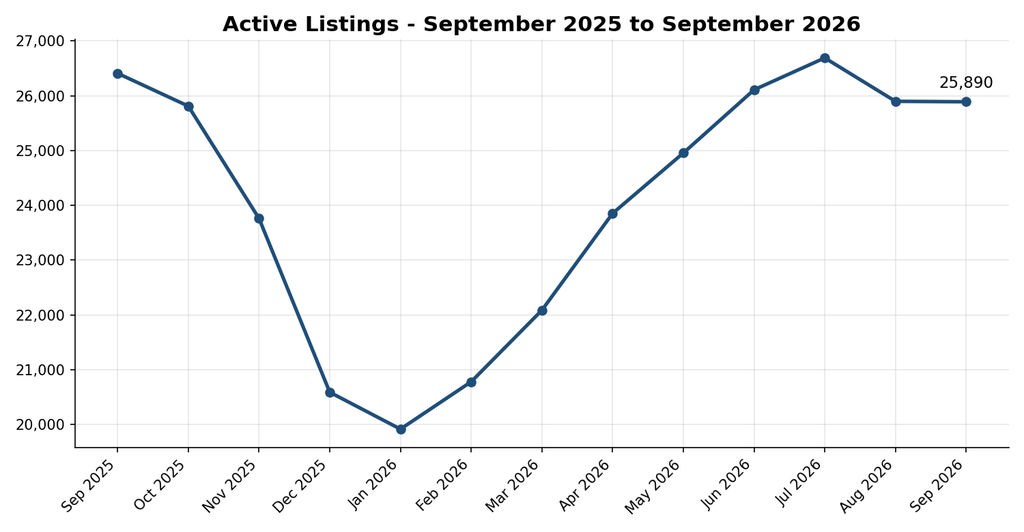
    • Active Listings: 25,890

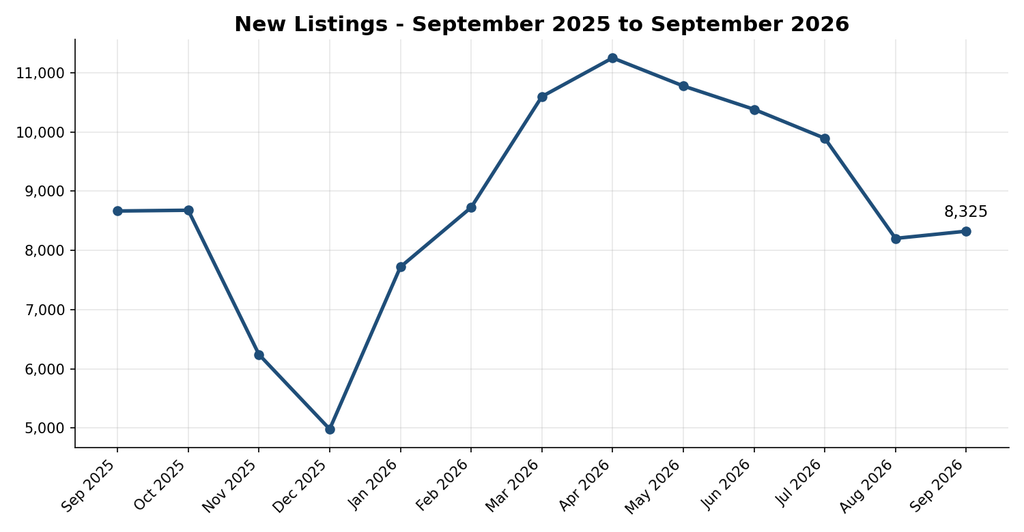
    • New Listings: 8,325

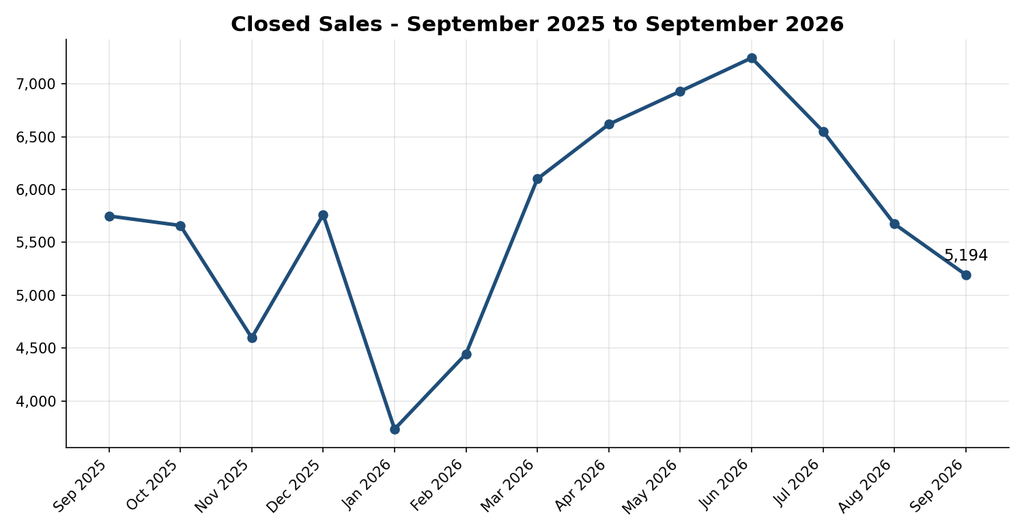
    • Closed Sales: 5,194

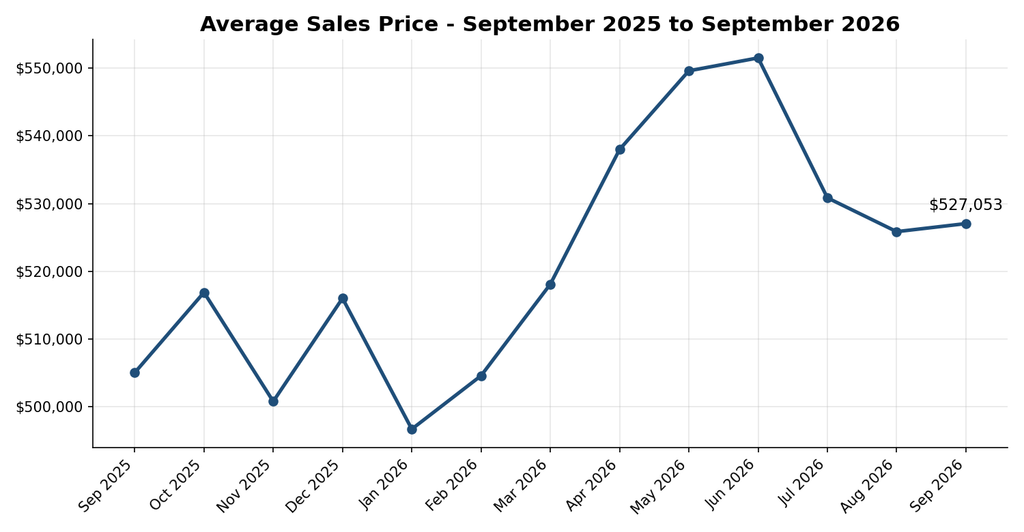
    • Average Price: $527,053

Active Listings

Active listings started at 26,409 last September, dropped to a 13-month low of 19,918 in January, and climbed back to 26,690 by July. September held at 25,890, nearly unchanged from August and just under where we were a year ago. That’s a lot of choice for buyers. It also means homes are taking longer to sell, and sellers face more competition than in years.

sept active listings


New Listings

New listings fell to a low of 4,980 in December, jumped to a high of 11,253 in April, and then declined four months in a row. September ticked up slightly to 8,325, about 4% below last year. Even with rates climbing, sellers haven’t stepped back. Many are still pricing based on what their neighbors received a year or two ago, and that expectation is part of why so much inventory is sitting on the market.

sept new listings


Closed Home Sales

This is the number to watch. After peaking at 7,245 in June, closed sales have fallen three months in a row, landing at 5,194 in September. That’s down 8.5% from August and a 10-year low for the month of September, with transactions down approximately 10% compared to September 2025. Fewer buyers are making it to the closing table, which shows just how much hesitation is in the market right now.

sept closed sales


Average Sales Price

Prices have held up better than sales. The average sales price moved between $496,728 in January and $551,501 in June, and closed September at $527,053, up 4.4% from a year ago. The bigger issue is affordability. Over the past 20 years, DFW home prices have risen to almost 2.4 times their previous levels, according to the S&P Cotality Case-Shiller Home Price Index. Over roughly the same period (2006 to 2024), median household incomes in Dallas, Collin, Denton, and Tarrant counties grew about 58%, based on U.S. Census Bureau data published through FRED.

sept average sales price


What This Means for Buyers

Typically, buyers would be excited about the opportunities that come with a buyer’s market. But if we’ve learned anything over the past few years, it’s that nothing about this market has been typical.

Instead, we’re seeing tremendous hesitation from buyers. And it’s not just about interest rates. Higher home prices, rising insurance costs, and property taxes are all squeezing affordability.

This growing affordability gap is one of the biggest challenges today’s homebuyers face. The good news? Opportunities still exist for buyers in this market. With less competition and more room to negotiate, buyers may find opportunities that weren’t available a few years ago.

However, buying a home is a major financial decision. Before deciding whether now is the right time to buy, consider your job stability, family needs, financial position, and risk tolerance.


What This Means for Sellers

For sellers, the struggle is real, and price reductions have become increasingly common. One of the biggest challenges we’re seeing is the gap between buyer and seller expectations. Buyers are more cautious than ever and unwilling to pay more than they believe a home is worth.

The result? A market where neither side is particularly willing to bridge that gap. With fewer buyers actively participating, sellers need to shift from testing the market to competing for the buyers who are actually in it.

That means pricing strategically from day one, making sure your home shows exceptionally well, and having a strong marketing plan that helps it stand out.


Final Thoughts

This market remains challenging for both buyers and sellers. But that doesn’t mean it’s the wrong time to make a move. It simply means having the right strategy matters more than ever.

If you’re thinking about buying or selling, develop a plan that reflects today’s market conditions, not what worked a few years ago.

DM me to set up a 30-minute strategy session. We’ll talk through your goals, review your options, and determine the best next steps for your situation.

stock, trading, monitor, business, finance, exchange, investment, market, trade, data, graph, economy, financial, currency, chart, information, technology, profit, forex, rate, foreign exchange, analysis, statistic, funds, digital, sell, earning, display, blue, accounting, index, management, black and white, monochrome, stock, stock, stock, trading, trading, trading, trading, trading, business, business, business, finance, finance, finance, finance, investment, investment, market, data, data, data, graph, economy, economy, economy, financial, technology, forex

Interest Rate Update

Where are rates today?

30-Year Fixed 15-Year Fixed
7.4% 6.71%
1 yr ago: 6.27% 1 yr ago: 5.52%

4 Things that need to happen for rates to go down.

  1. Peace with Iran: unlikely soon.  The talks look stalled and the headlines are about threats, not a deal. The only betting-market number I found gave about a 5% chance of a nuclear deal before Nov 1, and that was from late August. (so.. not looking promising) 
  2. A weaker jobs report: decent odds (medium to high). This is the most likely of the four. September added only 29,000 jobs against expectations of more, unemployment ticked up to 4.2%, and Kiplinger says job growth is slowing. The October report comes out in early November.
  3. No new tariffs: a toss-up (medium). A new round of 10–12.5% tariffs on 60 countries started in July, so a lot is already in place. Economists say the midterms as a reason trade headlines could flare up again.
  4. Nervous investors over AI debt: unpredictable (low to medium). It already happened once last week with CoreWeave. Whether it happens again is anyone’s guess, and it tends to help rates for a few days, not for months.
    1. What is CoreWeave? It is a company that rents out the computer chips AI runs on. It borrowed a huge amount of money to build data centers, and last week investors started worrying it might not be able to pay that back.  When investors worry – they move money out of stock and into bonds – like Mortgage bonds! 


Do you need to run numbers and calculate what your monthly payment will look like? Run your numbers with the Mortgage Nerd by clicking on the link here.

Contemporary apartment building facade with balconies in an urban setting.

Should I Buy Now or Wait?

Black and white photo showing a group of people waiting outside a historic stone building with arched windows.

If you’re renting in North Dallas and thinking about buying, you’ve probably asked yourself this question more than once: Should I buy now, or wait?


It makes sense to hesitate. Rates are sitting around 7.5%. The headlines change every week. Nobody wants to make a big financial move and regret it a year later. So a lot of buyers are doing the same thing right now. They’re waiting. But waiting isn’t free. It has a cost too. It’s just harder to see.


Let’s look at the numbers

Here’s a simple example. Say you find a $500,000 home today and put 20% down. At 7.5%, your monthly principal and interest is about $2,797. Now say you wait a year, and rates drop to 6.5%. That’s what most people are hoping for. But when rates drop, buyers who’ve been sitting on the sidelines come back. More buyers chasing the same homes usually drives prices up.


Scenario Home price Rate Down payment (20%) Monthly payment
Buy now $500,000 7.5% $100,000 $2,797
Wait 1 year, prices up 10% $550,000 6.5% $110,000 $2,781
Wait 1 year, prices up 5% $525,000 6.5% $105,000 $2,655
Buy now, refinance later $500,000 6.5% $100,000 $2,528

Principal and interest only on a 30-year fixed loan. This excludes taxes, insurance, HOA, and refinance closing costs. These are example numbers, not a forecast.


Look at the second row. You waited a full year for a lower rate, and your payment is almost exactly the same. Except now you needed $10,000 more for your down payment, and you owe $40,000 more on the loan. Now look at the last row. If you buy now and rates come down later, you can refinance. You lock in today’s price and still get the lower rate.

You can change your rate later. You can’t go back and change the price you paid.


Because the market is slower right now, we are seeing buyers get homes below appraisal value. One buyer actually contracted on a home that is $50,000 below appraisal, so prices going up 5-10% in a year or two is very realistic because they are making money going in, and we have pent-up demand in our Dallas-Fort Worth market. 


The part of waiting nobody talks about

While you wait, you’re still paying rent…every month. Rent gives you a place to live, and that matters. But none of it comes back to you. It builds your landlord’s equity, not yours. (Yes, you are paying someone else’s mortgage!!!) When you own, part of every payment pays down your loan. In the example above, about $3,700 goes toward your principal in the first year alone, and that number grows every year after. Here are your estimated mortgage paydown for the first 5 years.


Year 1  – 3,756

Year 2 – 4,048

Year 3 – 4,362

Year 4 – 4,701

Year 5 – 5,066


 In the first 5 years, you will have paid down your mortgage by $22K. If your home’s value rises, you benefit from that growth too. Let’s also assume a 4% annual appreciation rate, the national average. That would add $85K in appreciation over the next 5 years!  Renting at $2,500 a month over the next 5 years would cost you $150,000! There are other factors to consider when owning a home, including insurance, property taxes, and repairs, but I think this gives a sense that it may be worth a conversation if the timing is right.


Here in Dallas–Fort Worth, many buyers are sitting on the sidelines right now. North Dallas communities like Frisco, Plano, McKinney, and Prosper keep drawing new families and new jobs. When rates ease or the economy settles down, many of those buyers will move at the same time. That’s when competition picks up, and prices tend to follow.

So the real question isn’t “Are rates perfect?” It’s “What does waiting actually cost me?”


When waiting is the right call

I’m not going to tell you everyone should buy today. That wouldn’t be honest. Waiting can be the wise move if your job feels unsteady, if buying would drain your emergency savings, or if you might move again in the next few years. And a refinance is never guaranteed. Rates may not drop, and refinancing has its own closing costs.


Here’s the rule I give every buyer: only buy a home if the payment works at today’s rate. If you refinance later, it’s a bonus. Don’t build your budget around it. If the payment fits, the home is right, and you plan to stay a while, waiting for the “perfect” moment may cost you more than it saves.


One thing to do this week

Pull up your lease and write down two numbers: your monthly rent and how much you’ll have paid by the time your lease ends. Then let’s sit down and run your real numbers side by side: buying now, waiting a year, and what each one looks like for your budget. No pressure and no obligation. Just a clear picture so you can make the right decision for you.

Reach out anytime. I’m happy to help you think it through.

buying vs renting orig

Is a 50 year mortgage worth it?

Last year, an announcement proposed exploring 50-year mortgages to address affordability.

A 50-year mortgage offers lower monthly payments and easier qualification. But with slower equity building, is it actually a smart move?

The Monthly Payment Advantage on a $400,000 loan at 6.5%: 30-year mortgage: $2,528/month; 50-year mortgage: $2,287/month. That $241 monthly savings helps first-time buyers get in the door. But there’s a tradeoff.

The Equity Gap After 10 Years
Since most homeowners stay in their homes 8-10 years, this timeline matters.
Your principal paid down in 10 years:

    • 30-year loan: $80,000–$90,000

    • 50-year loan: $35,000–$40,000

You build less than half the equity through principal payments. But here’s what changes everything.


Appreciation Does the Heavy Lifting

Home prices nationally average 4% annual appreciation. Dallas–Fort Worth is expected to appreciate healthily over the long term because of continued population growth and strong demand. At 4% appreciation, a $400,000 home grows to $592,000 in 10 years, a $192,000 gain that benefits you regardless of mortgage term.  Now compare that to renting. The Real Cost of Renting.

Starting at $2,300/month with 3% annual increases:

    • Total spent over 10 years: $315,000

    • Equity gained: $0

    • Wealth built: $0

10 – Year Comparison: Renting vs 50 year Mortgage

Renting:

    • Total cost: $315,000

    • Wealth gained: $0

Buying with 50-year mortgage:

    • Principal paid: $35,000–$40,000

    • Appreciation: $192,000

    • Total wealth gained: $225,000–$230,000

Even with slower principal paydown, appreciation does the work.The Bottom Line

    • If you’re choosing between renting and buying: A 50-year mortgage still builds substantial wealth through appreciation.

    • If you can afford a 30-year loan: You’ll build equity faster and position yourself better for the next home.

    • Either way: Buying outperforms renting long-term, especially in growth markets like DFW.

The real question: Do you want to spend the next 10 years building your landlord’s wealth or your own?A 50-year mortgage isn’t perfect, but paired with appreciation and rising rents, it can be a solution for first-time buyers ready to build equity instead of watching opportunity slip away.

Wooden letter tiles arranged to spell 'CREDIT' on a rustic table background.

How to improve your credit score

You don’t need perfect credit to buy a home, but a lower score can quietly cost you thousands. Improving your score may take time, so start now if you plan to buy a home within the next 360 days. The good news? Most first-time buyers are closer than they think.


We always recommend working with your lender to develop the best strategy to improve your score, but here are a few pointers to get you started!

Why Your Credit Score Matters More Than the Purchase Price

Your credit score doesn’t just determine whether you qualify for a mortgage; it determines what you pay every single month. Even a 20–40 point improvement can unlock a better interest rate, lower your monthly payment, and save you tens of thousands over the life of your loan.


Here’s a general breakdown of where scores land:

      740+ — Excellent
      700–739 — Strong
      640–699 — Workable, but improvement helps
      Below 620 — Limited options; a plan is essential


If you’re in the 620–680 range, targeted moves can make a meaningful difference in 60–90 days.


6 Steps to Improve Your Score Before You Apply


  1. Don’t close old accounts. Older accounts help your credit history length. Keep them open even if you rarely use them. 
  2. Pay down credit card balances. Aim to use less than 30% of your available credit. Under 10% is even better. This alone can quickly move your score.
  3. Avoid opening new credit. New inquiries temporarily lower your score. Hold off on car loans, new cards, or “buy now, pay later” accounts for at least 6–12 months before applying.
  4. Never miss a payment. Payment history is the largest factor in your score. Set autopay as a safeguard.
  5. Dispute any errors. Pull your free report at AnnualCreditReport.com and look for accounts you don’t recognize or incorrect late payments. Errors are more common than you’d think, and disputing them can produce fast results.
  6. Request a credit limit increase. If you’ve been responsible with a card for 6–12 months, ask for a higher limit without increasing your spending. Lower utilization = higher score.


How Long Does It Take?
Small adjustments can show up in as little as 30–60 days. More significant rebuilds typically take 6–12 months. Either way, the goal isn’t to rush; it’s to buy smart.
If your score is below 580 or you have recent collections or charge-offs, I can connect you with reputable credit professionals focused on sustainable, long-term improvement.


Ready to Know Where You Stand?
You don’t need to figure this out alone. In a quick 15-minute call, I can walk through your situation, give you an honest assessment of where you are, and help you put together a clear path forward, whether you’re ready to buy now or need a short-term plan first.
No pressure. Just clarity.

Schedule Your Free 15-Minute Consultation →

money, finance, mortgage, loan, real-estate, business, success, exchange, financial, cash, currency, bank, investment, banking, wealth, coin, economy, profit, salary, rich, credit, payment, savings, deposit, growth, income, accounting, money, money, money, money, money, finance, business

How much down payment do you need?

If you’ve been putting off buying a home because you think you need 20% down, you’re not alone—and you might be waiting for a milestone you don’t actually need. The 20% down payment rule is one of the most common myths in real estate, and it’s keeping many first-time buyers on the sidelines longer than necessary.
​
Here’s what you actually need to know.

The 20% Down Payment Myth—Busted. The idea of a 20% down payment originated from a single benefit: avoiding private mortgage insurance (PMI). That’s a real cost worth understanding, but it is not a requirement for homeownership.
Consider a $400,000 home:
•20% down = $80,000 out of pocket
•5% down = $20,000
•3% down = $12,000
•0% down = possible for eligible buyers

According to the National Association of Realtors, the median down payment for first-time homebuyers consistently remains well below 20%. Most buyers use one of the loan types outlined below.

Down Payment Requirements by Loan Type:  

Conventional Loan: As Low as 3% DownConventional loans are the most common mortgage type. Qualified first-time buyers can put as little as 3% down, though 5% is more typical. PMI applies when your down payment is under 20%, but it can be removed once you reach sufficient equity.
•$400,000 home at 3% down = $12,000
•$400,000 home at 5% down = $20,000

FHA Loan: 3.5% Down with Flexible Credit Requirements. Backed by the Federal Housing Administration, FHA loans require just 3.5% down and are especially popular among first-time buyers because they accommodate lower credit scores and higher debt-to-income ratios.
•$400,000 home at 3.5% down = $14,000
•More lenient credit score minimums than conventional loans
•Mortgage insurance is required for the life of the loan (in most cases)

VA Loan: 0% Down for Veterans and Active Military. For eligible veterans, active-duty service members, and surviving spouses, the VA loan offers one of the most powerful benefits in real estate: zero down payment, no PMI, and competitive interest rates.
•$400,000 home: $0 down required
•No private mortgage insurance
•Must meet VA service eligibility requirements

Down Payment Assistance Programs: Help You May Not Know AboutOne of the most underutilized resources for first-time buyers is down payment assistance (DPA). These programs—offered at the federal, state, and local level—can significantly reduce what you need upfront.
•Grants that don’t need to be repaid
•Forgivable loans (forgiven after a set period of residency)
•Low-interest second mortgages
•Income and purchase price limits vary by program and location
Many buyers are surprised to find they qualify. It’s always worth checking what’s available in your area before assuming you have to go it alone.

Other Ways First-Time Buyers Cover Their Down Payment: Down payment funds don’t have to come entirely from a savings account. Common sources include:
•Gift funds from a family member (allowed under most loan programs with proper documentation)
•Tax refunds or year-end bonuses
•Proceeds from selling an asset
•Dedicated savings over time with a clear goal in mind

Don’t Forget Closing Costs. In addition to your down payment, plan for closing costs—typically 2–4% of the purchase price. On a $400,000 home, that’s another $8,000–$16,000.
The good news: there are strategies to reduce this number, including:
•Seller concessions (asking the seller to cover a portion of costs)
•Lender credits in exchange for a slightly higher interest rate
•Negotiating favorable terms as part of your offer

So How Much Should You Put Down?
The right down payment isn’t the lowest one available—it’s the one that fits your financial picture. The goal is to find a balance between:

•A monthly payment you can comfortably afford
•Preserving enough cash reserves for emergencies and move-in costs
•Your long-term financial and homeownership goals
Sometimes putting less down makes sense. Sometimes putting more down does. It depends on your situation—and that’s exactly what a good strategy session will help you figure out.

Your Next Step Toward Homeownership. Most people don’t need 20% down. They need clarity, a plan, and the right guidance.

In a Your First Home Strategy Session, we’ll walk through your specific options, map out a realistic timeline, and build a personalized homeownership roadmap together.

If you’re wondering whether homeownership is possible for you right now, the best first step is simply a conversation. Reach out to schedule your strategy session today.
 
Frequently Asked Questions:

Can I buy a home with no down payment?
Yes, in certain cases. VA loans allow eligible veterans and military members to purchase with 0% down. Some USDA loans also offer 100% financing in eligible rural areas.

Is PMI permanent?

Not on conventional loans. PMI can typically be removed once you reach 20% equity in your home, either through payments or appreciation. On FHA loans, mortgage insurance may last the life of the loan, depending on your down payment amount.

How do I find down payment assistance in my area?
A knowledgeable local real estate agent or mortgage lender can help you identify programs specific to your state, county, or city. Many programs go unused simply because buyers don’t know they exist.

Leave a Reply

Your email address will not be published. Required fields are marked *